
Reta

Reta
Reta Research Grade (RUO) (CAS 2381089-83-2, LY3437943) is a 39–amino acid unimolecular peptide designed as a triple agonist for GIP / GLP-1 / Glucagon (GCG) receptors. Supplied as a lyophilized white powder with ≥99% purity (HPLC verified) and endotoxin <1.0 EU/mg, it is soluble in sterile or bacteriostatic water.
The molecule includes a C20 fatty diacid moiety for albumin binding and extended stability (reported ~6-day half-life), supporting metabolic, obesity, T2D, and hepatic defatting research models.
For Research Use Only (RUO). Not for human or veterinary use.
Reta (RUO) | Triple GIP/GLP-1/Glucagon Agonist | ≥99% Purity
Product Specifications
- Product Name : Reta (Research Grade)
- CAS Number : 2381089-83-2
- Common Name : LY3437943
- Molecular Formula : C221H342N46O68
- Molecular Weight : 4731 g/mol
- Peptide Type : Triple-Hormone Receptor Agonist
- Target Receptors : GIP / GLP-1 / Glucagon (GCG)
- Purity : ≥99% (HPLC Verified)
- Form : Lyophilized White Powder
- Solubility : Soluble in sterile water or bacteriostatic water
- Endotoxin Level : Less than 1.0 EU/mg
Disclaimer : For Research Use Only (RUO). Not for human use.
Chemical Identity & Structural Mechanism
Reta is a synthetic unimolecular peptide comprising 39 amino acids. Unlike dual agonists, it integrates activity at the Glucagon Receptor (GCGR) alongside GIP and GLP-1, creating a “Triple Synergy”.
Structure-Activity Relationship (SAR): The backbone is derived from GIP but modified to introduce Glucagon activity. It features a C20 fatty diacid moiety that binds to albumin, protecting the peptide from enzymatic degradation and extending its half-life to approximately 6 days.
Tuned Potency: Reta is designed with a specific hierarchy of potency: highest at GIP (for lipid buffering), moderate at GLP-1 (for satiety), and carefully tuned at Glucagon (to drive energy expenditure without hyperglycemia) .
Chemical structure of Reta (LY3437943)
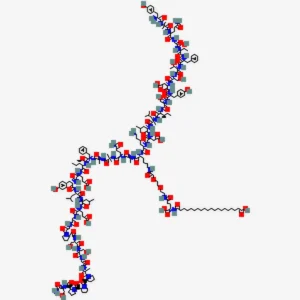
a triple-hormone receptor agonist (GIP/GLP-1/Glucagon). The highlighted C20 fatty acid moiety facilitates albumin binding, extending the half-life to ~6 days for sustained metabolic research.